Main
Original Content
Universal Orrery
More

2025-10-19
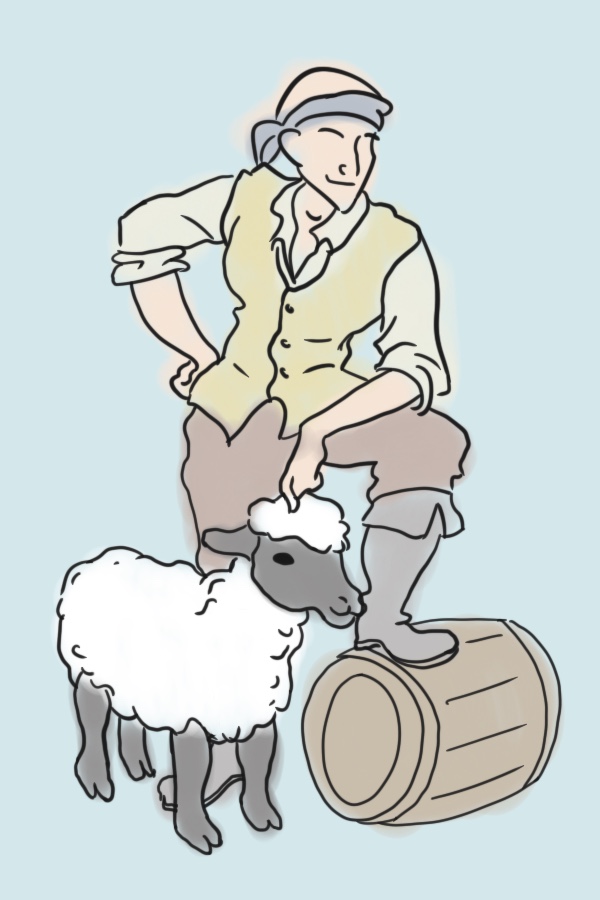
“Don’t be a sheep” is a phrase associated with free thinkers. People who do their own research and don’t just blindly trust what someone else tells them. It is a phrase said by these thinkers to those who “follow the herd” instead of blazing their own path. Sheep aren’t very smart creatures. They are docile, helpless, trusting, and will follow the lead of anything nearby them, whether that be a shepherd, a sheepdog, or a wolf looking to devour. To “be a sheep” is to ignore obvious evidence in favor of going with the flow, no matter where it might lead.
Not an ideal life. At least not for me.
If I am to be a free thinker, I cannot be buoyed by the waves of opinion around me. I must forge a ship of thought, chart the stars of evidence, and sail towards the horizon of truth. The ship, I would argue, is the most important first step. A system of core beliefs will enable me to navigate the world and decide which evidence to follow as a North Star and which evidence to disregard as false or misleading.
Over the last several years, I have spent my time constructing this boat. It is not a grand frigate of complex thought quite yet, for it is new and freshly lacquered. It is instead a mere sloop of belief - a quick and dirty vessel which will help me in the first steps of my journey, allowing me to continue adding and revising it as my path forges onwards.
I must confess that I am not a master shipwright nor navigator. I make no claims to know how to think properly or chart the world of information. This message is not a scripture of what to believe or how to believe it. It is only a record of my own journey. If someone wishes to know how I arrived at some particular island, I can only point to my boat and describe why and how I navigated in such a way. That is what this message is.
To my knowledge, the two most important parts of a boat are the keel and the mast, to which all other components are built upon and rely on. Similarly, my worldview relies on two base assumptions: The Keel of Limited Time and the Mast of Limited Truth. I will explain those two premises first, offer some counterarguments as well as my responses to them, and finish off with the conclusion I find most reasonable.
or: "no one is immortal"
The one true fact about every person is that we all will die; we have limited time in this world, and what we do with it is the most important decision we can make. Importantly: we cannot do everything.
To be a free thinker is to do your own research, but I cannot do all of it. I do not have enough time in my life to become a master mathematician, writer, philosopher, biologist, geologist, cosmologist, immunologist, political scientist, and the hundreds and hundreds of other fields out there. I can pick one - maybe two - to master, and perhaps I can spread out my time to have a cursory knowledge in many fields. Over time, my understanding across the breadth of human knowledge will likely follow a sort of “bell curve” with a few topics I understand deeply, some I understand less, some even less, and many I understand very little or not at all. (fig. 1)
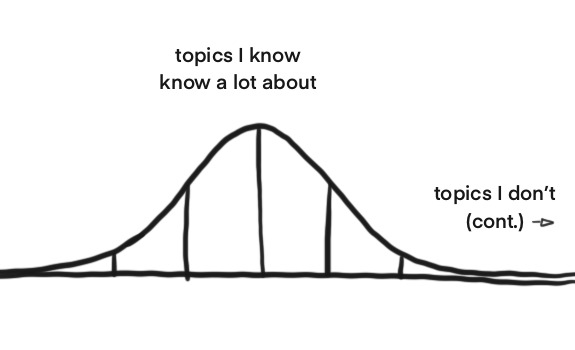
figure 1
For the topics on the outer reaches of my understanding, I have two options: I can either ignore them and hope they don’t affect me in any way, or I can rely upon the knowledge of someone I trust.
For me, personally, ignoring a problem rarely makes it go away on its own.
Now of course, I am able to freely choose who to rely on for myself; I do not have to follow the herd at all. There are many voices out there, so it is up to me to decide who to trust and by how much. Furthermore, I always have the option to stop trusting someone I trusted before, or to begin trusting someone I previously didn’t.
To return to the analogy, if my navigation instruments are inoperable in certain climates, it may be wise to follow another ship through the night, but if it changes its bearing and veers off its course, I can always choose to follow a different ship.
But which ship should I follow? If my navigation is down and I cannot rely on myself or “check the work” of the other ships, is there a way to know who is heading towards the truth and who is heading towards the rocky crags?
I believe I have found a method.
or: "two plus two probably doesn’t equal five"
Consider I was to ask someone a question, “what is the chemical formula for water?” without knowing the answer myself. What sort of answer could a person give me? They might respond correctly - H20 - or they might give any other answer - H30, O2, C4H10, or Al2(SO4)3. Assuming they are not obliged to give the correct answer, they could potentially respond with any answer at all, and it would be my job to determine what the truth is - if their answer is correct or incorrect.
To visualize, imagine all possible answers to this question are points around a circle. Just as there are infinite points, there are infinite potential answers. When we ask the question, the answer we receive can be visualized as an arrow pointing towards a particular point, and thus, a particular answer. (fig. 2)
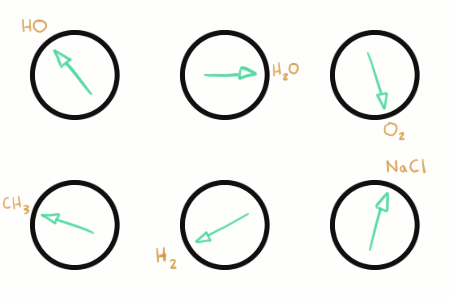
figure 2
Assuming the person is under no obligation to give the correct answer, there would be no way to know if they are right. Perhaps they are being truthful, perhaps they are lying, or perhaps they don’t know and are giving it their best guess. There is no way for us to know which is which. It seems that asking someone for the truth when you don’t know the truth yourself is doomed to fail.
But let’s consider a different situation. I ask a question, but instead of asking one person, I ask one hundred. As before, none of them are guaranteed to know the correct answer, and even if they do, they are under no obligation to tell the truth, although they are welcome to do so if they wish.
Consider a situation where no one knows the correct answer. Imagine asking one hundred children what the largest number is (or, if you want a question with an objective “true” answer: “what is the largest number used in a published scientific proof?”). The answers you would receive would probably look like this. (fig. 3)
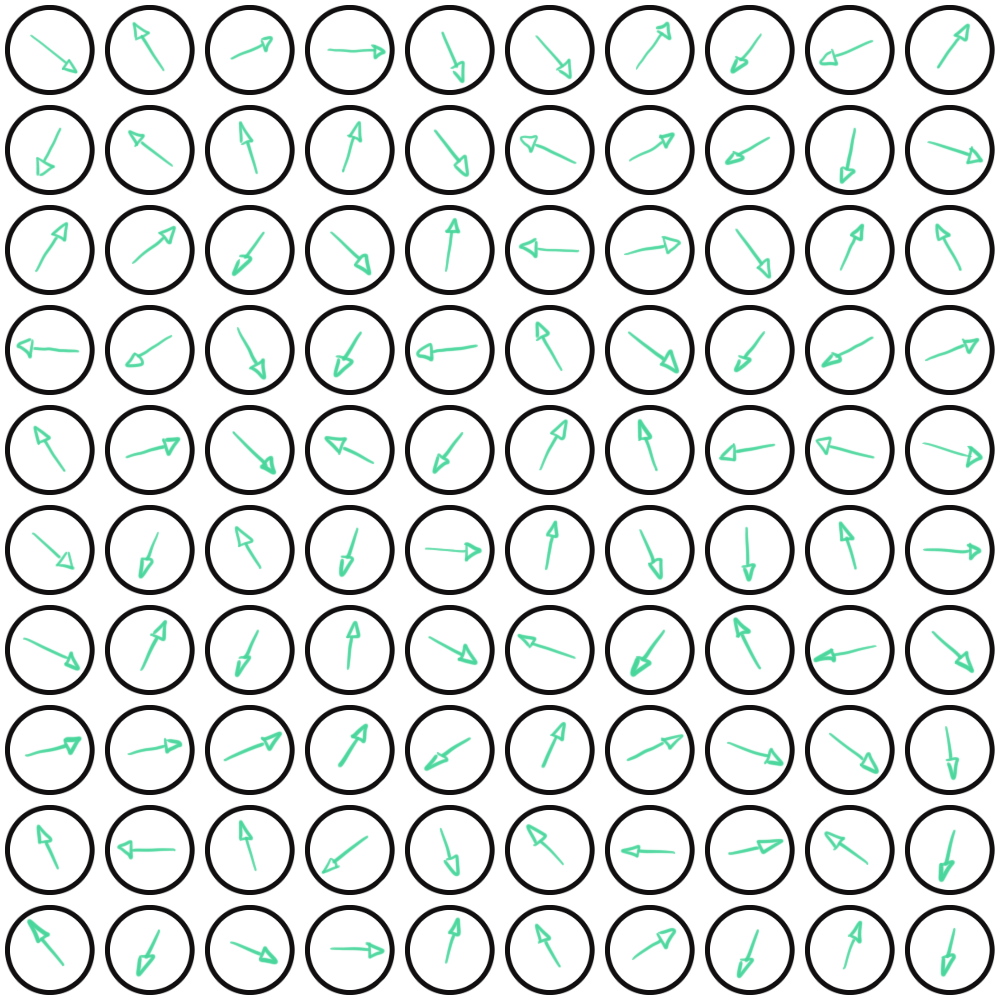
figure 3
One hundred different answers from 100 different answerers. There is no pattern, no way of discerning one from the other. One of them could be correct, but unfortunately, there is no way to know if a correct answer exists at all, or which it might be. Another failure.
But now let’s consider a second situation. Imagine that at least some of the people know the correct answer, and at least some of them are willing to give an accurate response. For example, imagine asking “how many meters above sea level is the peak of Mount Everest?” The answers you would receive might look something like this. (fig. 4)
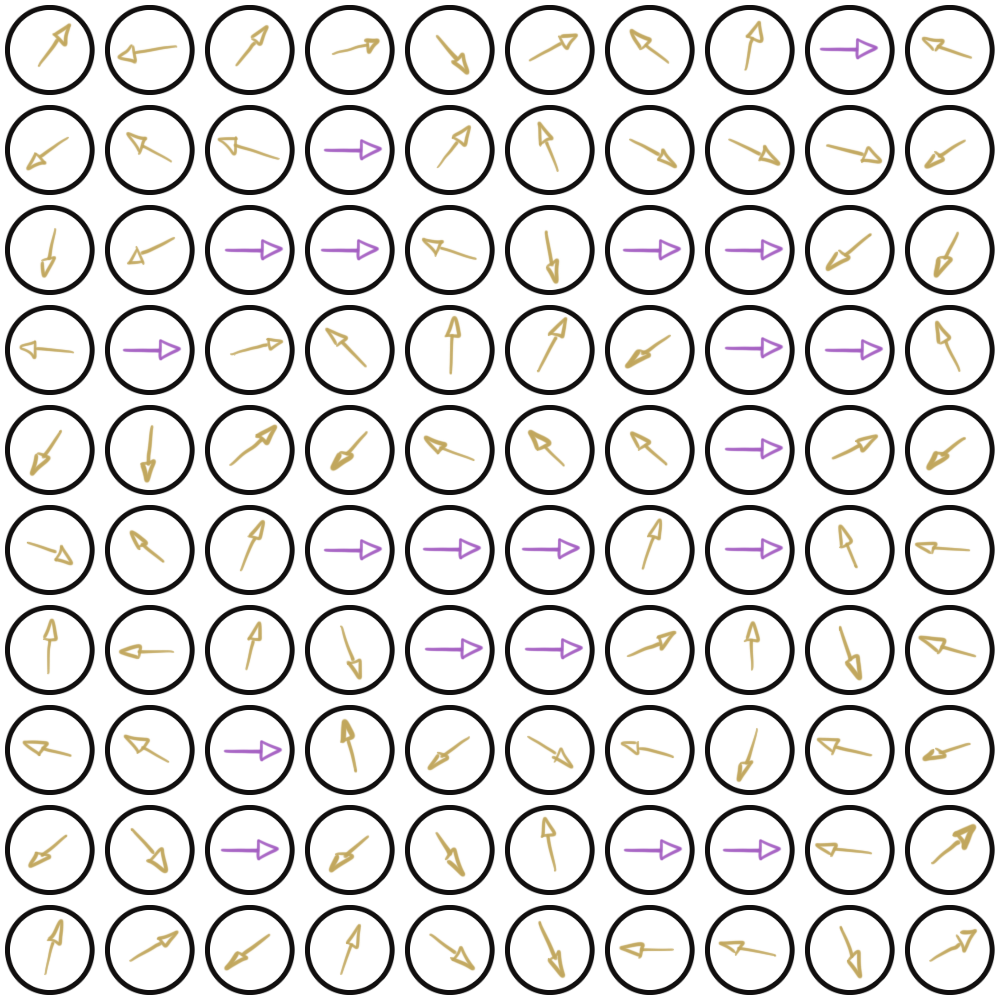
figure 4
Aha! A pattern emerges! Of the 100 responses, 80 of them point in random directions while 20 point in the same direction. The 80 arrows do have a few matches - there are two or three arrows that point in the same direction here and there, where two or three people happened to give the same incorrect answer by chance - but for the most part, they are all disparate and unaligned. The 20, however, all point in the exact same direction. Those 20 people are the ones who know the answer and are willing to share it.
This illustrates a key element of the mast: The Truth can only ever be The Truth, but a Falsehood can be Anything.
People who do not know the truth, or do not wish to share the truth, can give any answer to a question, they can formulate any response from the infinity of possible responses, and thus, are doomed to be "unaligned" not only from the truth, but also unaligned from all the other falsehoods as well. When asked what the chemical formula for water is, a falsehood can be anything.
However, those that have the truth and wish to share it can only ever give one answer, and they all must give the same answer. The chemical formula for water can only be H20. The truth can only ever be the truth.
This is my guiding principle at sea. When my navigation systems are down, I am forced to rely on other ships to lead me, at least until I can navigate for myself. But instead of choosing a single ship and hoping that they are correct in their bearing, I look to the fleet. If a hundred ships are heading north, and one breaks off to head west, I believe that the hundred are far more likely to be true.
Between the Keel of Limited Time and the Mast of Limited Truth, I believe myself to have a fairly reliable method of finding my way across the oceans of information. But it would be unwise to set sail before ensuring that it is robust enough to hold back treacherous waters. By testing it against the strongest arguments, I can be confident that it will hold firm.
I believe there to be two situations where my ship is in the most danger - The Dividing Winds and The Lone Buccaneer. I will enumerate both and offer my rebuttals before concluding.
or: "what if the liars collaborate?"
The worst situation for the Mast of Limited Truth is when a band of scoundrels ally themselves to act together as one. When building the mast, we posit that falsehoods cancel out since they all point in different directions, but a coordinated effort might bring it down by offering an “alternate truth” where a multitude of people all give the same false answer. The most obvious situation where this might occur is with political parties, where all members “fall in line” to give the same talking points, no matter what the truth might actually be. (Fig. 5)
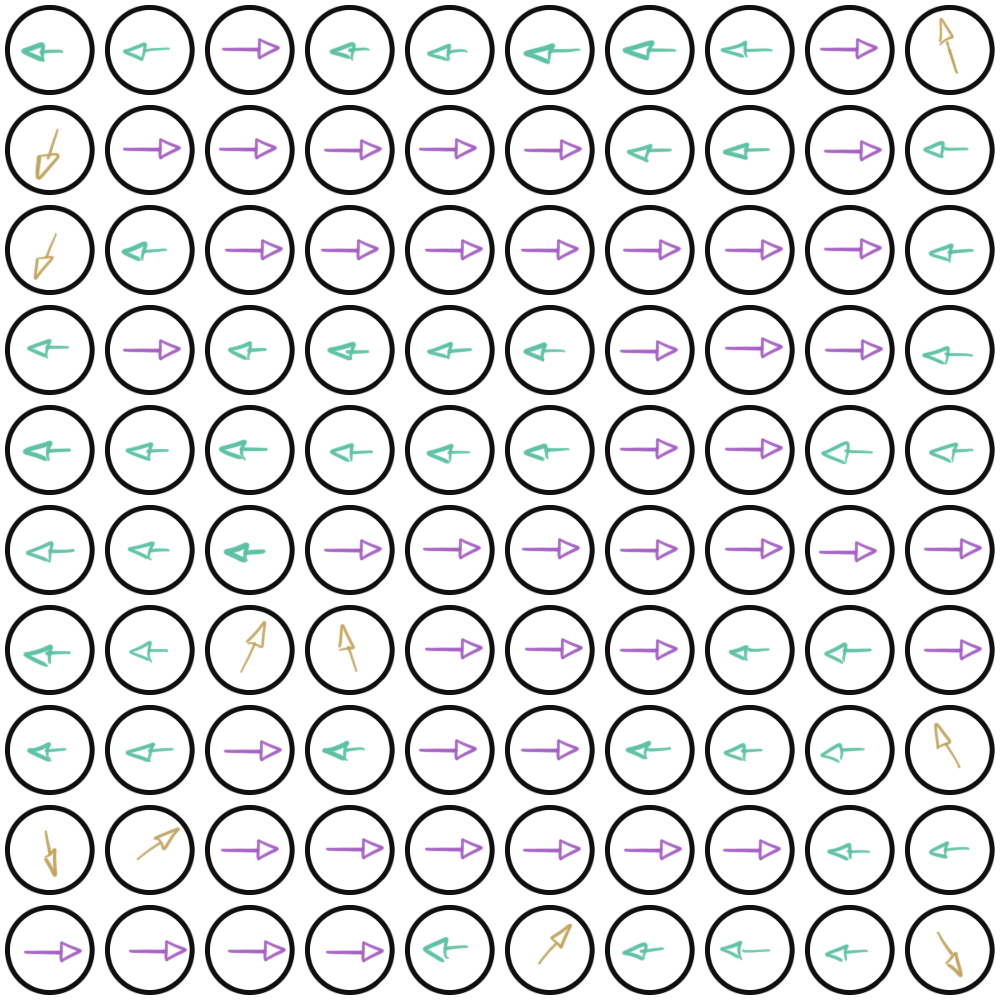
figure 5
This is a bad situation to be in, there are no two ways about it, but I would argue that the dividing winds are not so coordinated as they seem. I once heard a proverb famously attributed to Benjamin Franklin that says “three can keep a secret, if two of them are dead.” That is to say: the more people that know a secret, the more likely that it will be revealed. To hold a united front with false information requires a tremendous amount of work, and the cracks that inevitably form are easy to spot if you know how to look.
The easiest crack to spot, in my opinion, is Managed Misalignment. This occurs as a matter of course in such situations. No one will adhere to a lie without reason, so each individual or entity perpetuating the “alternate truth” has something to gain in doing so. However, it is rare that they all want the same thing. Often, different individuals will actually perpetuate slightly different narratives in order to further their own goals, and once you spot this misalignment, and track down their reasons for supporting it, the cracks in the entire structure begin to show. (Fig. 6)
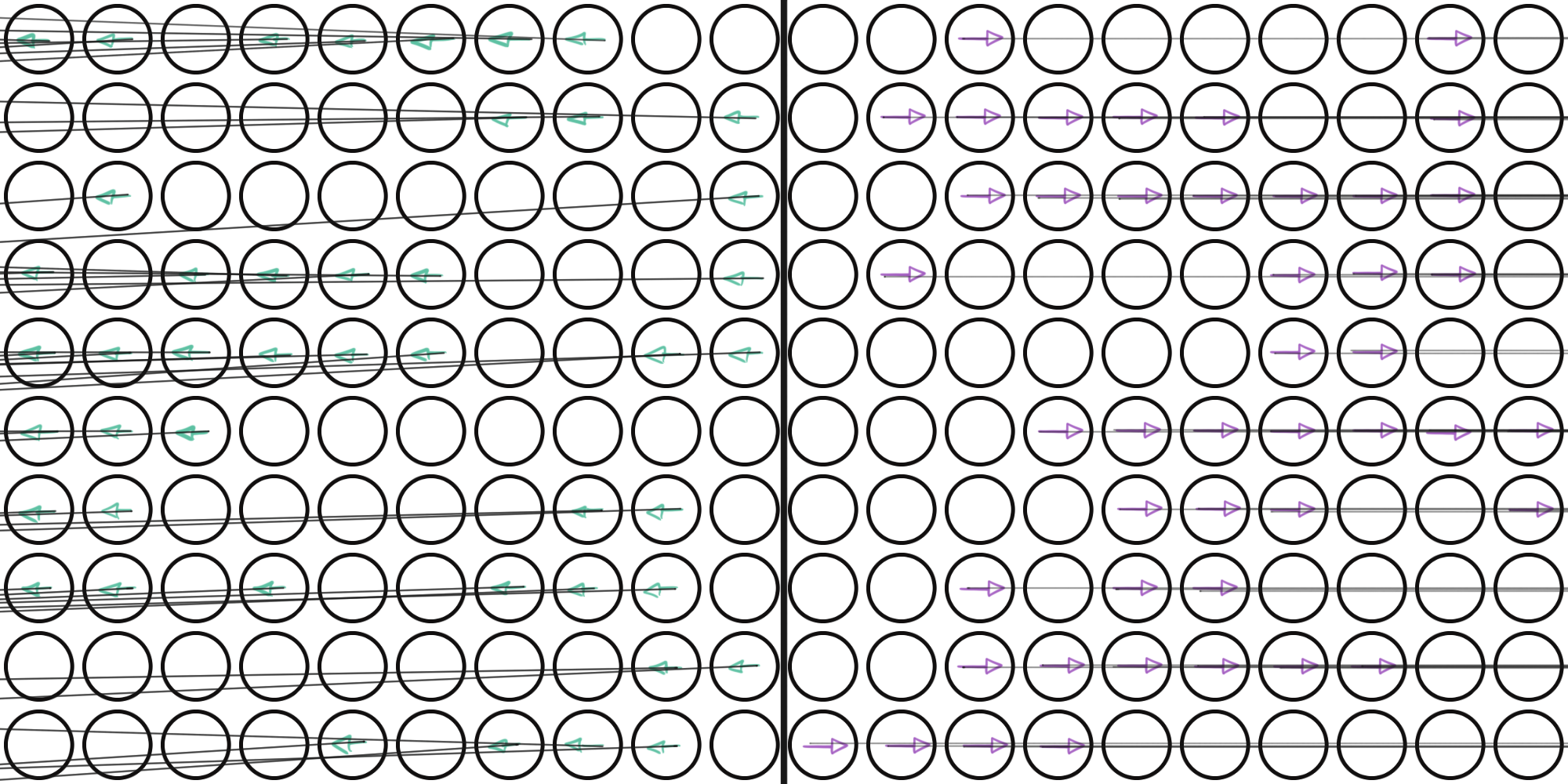
figure 6
For example, when it comes to anthropogenic climate change, as of 2025, more than 90% of leading scientists in related fields such as climate science and earth science all agree that (1) the atmospheric temperature is rising at an unprecedented rate, (2) the amount of change and rate of change is dangerous and will continue to get more so if it continues as it is, and (3) it is "incontrovertible" that human activity is the cause for the change, along with several other specific consensus points regarding exact numbers and effects (so in reality, at 90% the diagram would look more like this, but for now let’s pretend that they’re even at least in terms of numbers). By comparison, detractors of anthropogenic climate change do not agree on a single narrative. Some claim that climate change is not happening at all, some claim it is happening but it is not caused by human activity, some claim that it is caused by human activity but it is not a bad thing, some claim that it is caused by humans and it is bad but there is nothing to be done about it now. There is no consensus among those promoting the “alternate truth.”
When sailing, I still argue that it is best to follow the fleet. Some may claim that there are actually two fleets moving in two different directions, but a closer look reveals that while one group is charting a course together, the rest seem to be moving individually in every which way, with no unified bearing or course. If my navigation systems are down, and I am to follow one of these groups to the horizon of truth, I know which will get me to my destination safely.
or: "what if one person holds the truth?"
It is a rare event that one person, veering off course of the fleet, finds themselves in clearer waters and closer to the truth than before. The most popular example is, of course, Galileo Galilei, who separated himself from the consensus of the Catholic Church to consider heliocentrism. One might argue that to only agree with consensus is to dissuade potential revelations like his.
In response, I ask that we consider the case of Samuel Rowbotham, the man credited with the modern-day resurgence of the flat-earth concept. Separating himself from the consensus of modern scientific theory, he proposed that the earth is not a globe and instead a disk shape. The difference between the two, I would argue, is that over time, gradual scientific evidence eventually agreed with Galileo, whereas it has actively disproven Rowbotham.
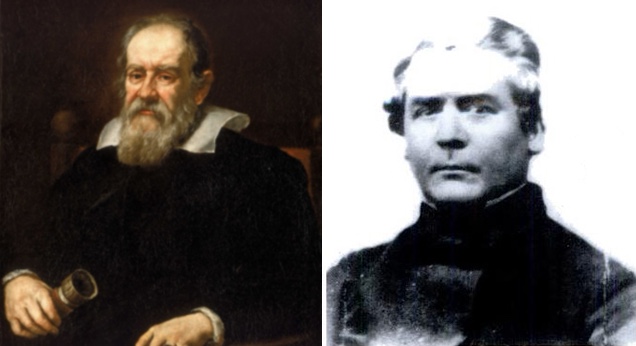
My argument against the Lone Buccaneer is twofold: Firstly, there will always be those who veer from consensus. For every one Galileo pointing towards the truth, there will be ten Rowbothams pointing towards falsehoods. To argue that we should follow every lone buccaneer we come across would be to put ourselves in shaky waters 9 times out of 10. Secondly, I believe that the truth will always, eventually, come forth. Over time, incorrect theories and assumptions are disproven, correct theories are tested and tested and hold true. While we can never be sure that any given fact is 100% true at any given time, the fact of the matter is that - as a whole - the consensus gets more correct day by day as the chaff is separated from the wheat.
I am not an astronomer. If I was alive during Galileo’s time, I would not have the knowledge or resources to test his theories, so to me, there would be no way for me to know if he was correct or not. All I could do is trust the scientific consensus at the time with the faith that, eventually, if Galileo was correct, he would be proven correct.
And eventually he was. Whereas people like Rowbotham are not.
And so, here in the modern day, if a lone buccaneer shows its face with a theory that goes against the scientific consensus, I only have two options. I can either perform first-hand research myself - purchase a telescope or a laser level (used to measure the curvature of the earth), perform the experiments myself, and determine whether their theories are correct or not based on my own work (which might require additional learning if I do not have relevant expertise) - or I can trust the consensus and trust that eventually the truth will reveal itself, either for or against the lone individual.
On open waters, following the fleet leads to your destination; following one ship into the night could lead anywhere.
With the Keel of Limited Time and the Mast of Limited Truth, I have constructed a small ship of belief. I have tested it against the strongest opposing winds and the most treacherous of waters, and my ship still holds firm. I believe I am ready to face the open sea.
But that isn’t exactly correct, of course. The truth is that I have been sailing for some time now. We all launch our ships when we are born, and spend our entire lives replacing masts and keels and hulls and beams as we grow and learn, and we can only hope that every day our ship will allow us to get closer to the truth than the day prior.
As children, we are taught to follow. Our parents tell us to believe what they believe. We are taught to keep in their wake, and follow behind until we have built our own ship. Eventually, it comes time to set sail. Your courses may not align, but you hope that you all reach the same shores in the end.
As I struck out with my own ship, I found my navigation instruments were limited, and I could not rely on them nearly as much as I thought I could. There is so much information out on the ocean of knowledge, and I had no hope of knowing it all, so I was given a choice. I could navigate blind, following the whims of the sea and hoping they would lead me forward. I could do as I had before - picking one ship out of many and riding their wake until destination or destruction. Or I could follow the fleet as one ship out of many, leading or following as the situation would merit.
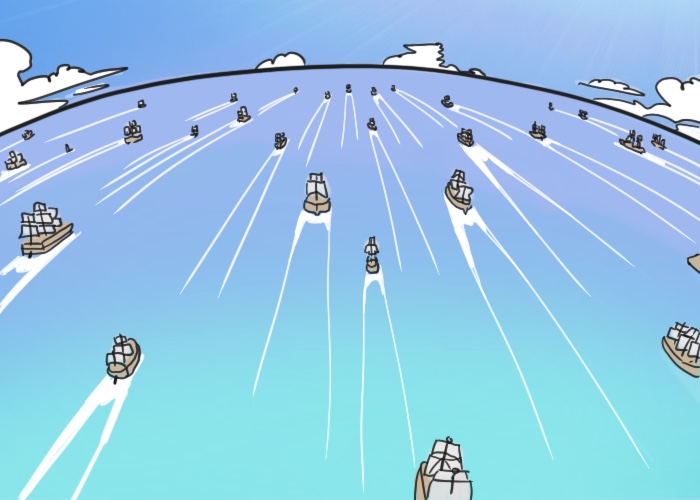
And so I choose to be a sailor. On a sea with a hundred thousand shepherds, the flock moves together towards the truth. When it comes to fields in which I have no expertise, I become a ship in the line, I read the patterns of the fleet and decide who to follow. In fields which I am studied, I am able to trim the sails of my own knowledge and move forward. My hope is that, as I become older and wiser, with a ship filled with more knowledge and fitted for piercing new waters, I will join the throng of sailors at the front of the charge. Not as a single ship leading the others, but as a part of the whole, all sailing together as one.

 No generative artificial intelligence (GenAI) was used in the creation of this website | Site Version 1.2.0